Most storage operators rebuild their website for the wrong reason. The site feels old, a competitor across town launched a slick redesign, or the booking flow shows the manager's email in plain text and that looks unprofessional. So the operator signs a twenty-thousand-dollar contract with a marketing agency, four months go by, the new site launches, and the rent roll does exactly what it did before.
There are four numbers that tell you whether a rebuild is actually warranted. You can pull every one of them in an afternoon, without any new software, before you sign anything.
A redesign that does not change the four numbers below has changed nothing that pays for itself.
1. Direct-to-listing impressions in Google Search Console
Open Google Search Console. Filter to the last 28 days. Look at the total impressions on your top three queries, usually the city plus "self storage". If you are getting fewer than three thousand monthly impressions on those queries, the problem is not the website. The problem is that operators in your market do not know your facility exists. A redesign will not fix that. Google Business Profile and local backlinks will.
If you are getting more than three thousand impressions but your click-through rate is under 1.5%, the issue is the SERP itself, your title and snippet are getting beaten by competitors. Test rewriting the homepage meta title and description first. That is a free experiment with measurable upside.

2. Sessions to booking attempts

Google Analytics 4 calls a booking attempt a key event. If you do not
have your reservation button instrumented as a key event, instrument it
before you do anything else. The conversion rate you want to know is
sessions → booking attempts.
Anywhere from 2% to 6% is normal for a storage operator's website depending on traffic mix. Under 2% and the site is leaking, most often in the booking form itself, not the marketing pages. Over 6% and you already have a good site; a redesign will likely move the number down.
3. Booking attempt to completed reservation
This is the number every redesign promises to fix and almost none actually do. The booking form converting at 35-55% is healthy for a storage form with payment. Under 30% means the form is the problem, not the site around it. The fix is usually shortening the form, most storage forms ask for five things that an existing facility-management system already knows.

4. After-hours share of completed bookings
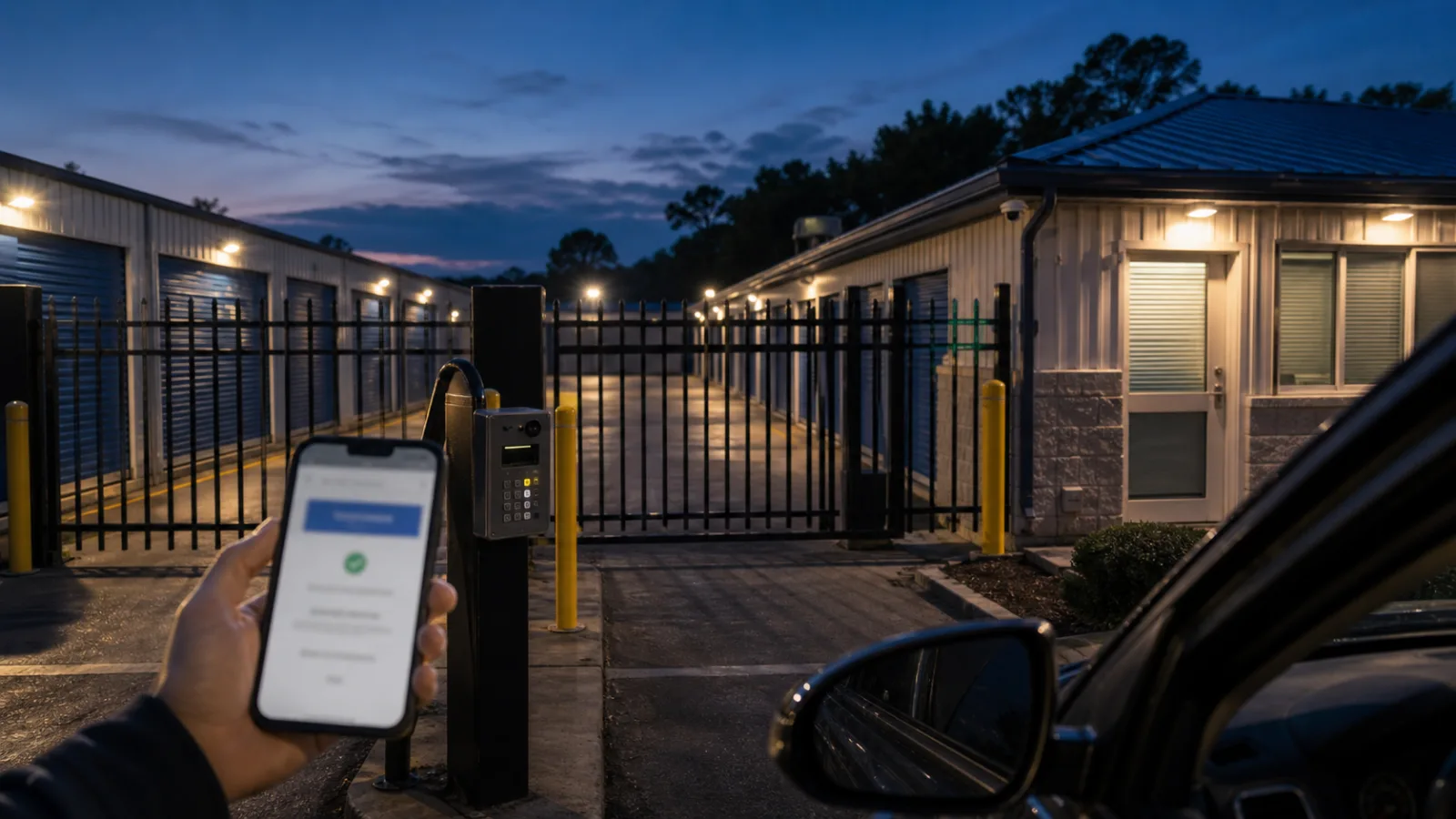
Pull a year of bookings. What share landed between 6:00 p.m. and 8:00 a.m. local time, or on weekends?
If that share is above 35%, and it is, for most operators we look at , the question stops being "should we rebuild the site" and starts being "is the after-hours booking path the best it can be". That is a booking-flow question, not a website-design question.
What the numbers tell you
Take all four numbers and put them in a single grid:
| Metric | Healthy range | Diagnosis if outside |
|---|---|---|
| GSC impressions on top three queries | 3,000+ monthly | Local SEO problem, not a site problem |
| GSC click-through rate | 1.5%+ | Title/snippet rewrite needed |
| Sessions → booking attempts | 2–6% | Below: site leaks. Above: site is fine. |
| Booking attempt → completed | 35–55% | Below: shorten the form, not the brand |
| After-hours booking share | 35%+ | Real demand exists; protect the after-hours flow |

If three of the four numbers are healthy, you do not need a redesign. You need a focused fix on the one that is not, and a redesign is rarely the right tool for any of these four problems.
What this means for the rebuild conversation
When a marketing agency proposes a website rebuild, ask them which of the four numbers will move. Not "engagement", not "modernization", not "brand alignment". Which specific number, by how much, and how soon. If they cannot answer in that shape, the proposal is not a rebuild, it is a redesign hoping to find a problem to solve.

The other thing the audit makes clear is that the after-hours path matters more than the brand. Operators who get the booking flow right quietly win the after-hours market in their city, and they do it on the website they already have. That is the case for an embedded booking layer over the storage software you already run, rather than a new website. Which is the kind of thing we help operators do at StorageFlo.io.
Sources
- 1Google Search Central, Search Consolesupport.google.com
- 2Google Analytics 4, Engagement metricssupport.google.com